
The Meaning Filter
Why Every Great Life Starts With This One Question

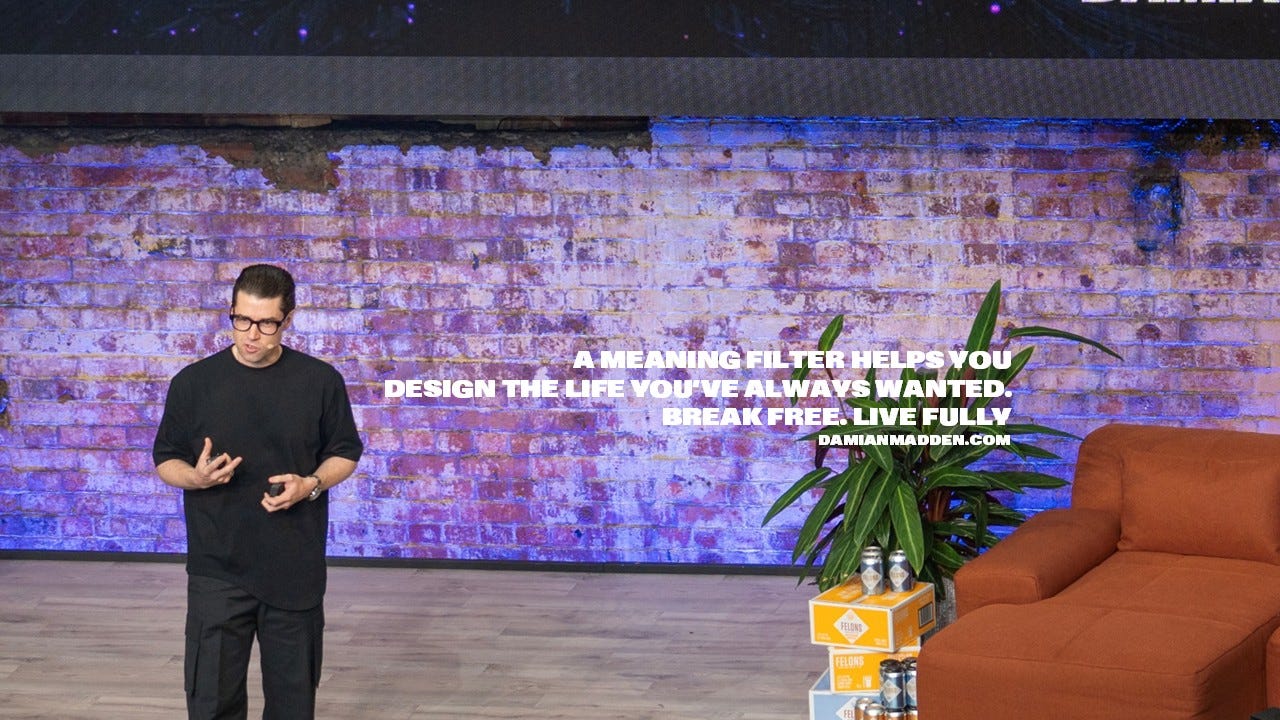
At some point, most of us are taught a quiet lie: that good decisions are built on logic. We learn to weigh pros and cons, chase what’s efficient, follow what makes sense. We learn to optimise. To analyse. To trust outcomes over instincts.
But in the background, a quieter part of us is asking something different. Not, “Does this make sense?” But something softer. Slower. Far more human:
“What does this mean to me?”
And the truth is, that’s the question that changes everything.
Because a life of clarity, connection, and fulfilment doesn’t begin with strategy. It begins with meaning.
I’ve worked with enough leaders, founders, artists, and creators throughout my career to see the pattern. Most of the decisions that look good on paper, the ones that follow the rules, the market, the model, eventually lead to friction. Burnout. Stagnation. Quiet dissatisfaction. Be that on a personal or brand/business level.
Not because the choices were bad. But because they were empty of meaning.
We can follow logic all the way into a life that doesn’t feel like ours. We can build something successful and feel completely disconnected from it. And the most tragic part? We may not realise it until years later, when the cost of ignoring meaning finally shows up as fatigue, apathy, redundancy, bankruptcy or the slow erosion of joy.
I’ve experienced this firsthand. And I’ve seen what happens when people stop chasing what they “should” do and begin choosing what feels true instead.
That shift begins by asking the most underused yet transformative question we have:
“What does this mean to me, now?”
So that’s why I began to think about the concept of a meaning filter. The meaning filter is simple. It’s the practice of running your decisions, not just the big ones, but the everyday ones, through a deeper lens:
What does this represent in my life right now?
What version of me is making this choice?
Am I acting from habit or from alignment?
Will this still matter to me when the dust settles?
It’s not a rejection of logic. It’s an invitation to integrate it with emotion, context, and self-awareness. It turns decisions from checklists into turning points.
In my book (to be published next year) and on my YouTube channel, I talk about how life can be re-designed, not by adding more, but by connecting more. Not by changing everything at once, but by reconnecting to what matters and shaping your experience around it.
But here’s the part I don’t want you to miss:
You can’t design a meaningful life if you don’t know what something means to you.
So many people come to the idea of re-design wanting to fix, pivot, or start over. But they haven’t stopped to ask if what they’re building is actually aligned with what they value.
That’s like designing a house with no floor plan. You might end up with a roof, but you won’t want to live there.
Meaning is the blueprint. It’s not decorative. It’s structural.
When we don’t ask what things mean to us, we begin to live in default mode. We say yes out of guilt. We say no out of fear. We pursue goals that once lit us up but now leave us cold. We build success based on someone else’s definition.
And we wonder why we feel disconnected. Why we feel like we’re always chasing, always busy, always slightly behind, even when everything looks “fine.”
I call this emotional drift. It’s subtle. It’s slow. But over time, it can carry you far away from the life you meant to live.
The meaning filter is how you reorient. It’s how you come back to yourself.
But you don’t need to overhaul your life tomorrow. You just need to begin noticing. When I am working with someone as part of my Future Self Lab I recommend they start by:
1. Revisit One Recent Decision
Think of something you agreed to this month, a project, a dinner, a collaboration. Ask yourself honestly:
Why did I say yes?
What part of me was speaking in that moment?
Does that choice reflect who I am today, or someone I used to be?
You might find it still aligns. You might find it doesn’t. That awareness alone is powerful.
2. Use Meaning as a Daily Filter
Each morning, before checking your phone or calendar, ask:
“What would make today meaningful, not just productive?”
You’ll be surprised how quickly your priorities start to shift.
3. Write Down What Stays With You
At the end of the day, don’t just record what you did. Record what mattered:
What moment felt most human?
When did you feel most like yourself?
What stayed in your body longer than it stayed on your schedule?
Over time, this builds an emotional map of your life’s meaning.
As part of this ongoing exploration, I’ve launched a new YouTube channel, a space where I share reflections, tools, and stories to help you reconnect with what matters and redesign your life with clarity and presence.
Each episode is short, practical, and grounded in psychology I know works. They’re not about fixing yourself. They’re about seeing differently.
If you’re someone who’s been feeling a little off-course lately, or if you’re ready to build a life that feels deeply yours, I’d love to have you join me.
When you begin to live through the meaning filter, something changes. Life becomes less about optimisation, and more about orientation. Less about outcomes, and more about experience. Less about performance, and more about presence.
You don’t need to be perfect. You don’t need to know everything. You just need to begin asking:
“What does this mean to me, now?”
And let that question become a compass.
Because at the end of the day, the greatest thing you’ll ever design is not your schedule, your career, or your brand.
It’s your life.
And meaning is the material it’s made from.